FAQs: Vibroacoustic Therapy (VAT)
What is Vibroacoustic Therapy?
Vibroacoustic Therapy (VAT) combines low-frequency sound vibrations with music to create a calming, full-body experience. Using a specialized VAT chair or table, gentle vibrations travel through the body while immersive audio supports relaxation, nervous system regulation, and overall well-being.
How does Vibroacoustic Therapy impact the nervous system?
The frequencies used in vibroacoustic therapy are designed to support activation of the parasympathetic nervous system—the body’s “rest and restore” response. This may help reduce stress hormones and encourage a state of calm and balance. Individual experiences vary.
How does VAT enter the body?
VAT uses low-frequency sound vibrations delivered through the VAT chair or table. These vibrations enter the body through:
- Skin and connective tissue (somatosensory system)
- Muscles and joints (proprioceptive system)
- Inner ear (auditory/vestibular system)
From there, the signals travel along sensory nerves to the spinal cord and up into the brain. This is often called a bottom-up approach—starting in the body and moving toward the brain.
What part of the brain does VAT work on?
Vibroacoustic Therapy (VAT) doesn’t “work on” one single brain structure the way a medication targets a receptor. Instead, it supports the brain through sensory pathways that begin in the body and travel upward to key regulatory centers.
Rather than targeting one area, VAT influences a network of brain regions responsible for regulation and safety:
Brainstem (indirectly)
The brainstem controls breathing, heart rate, and stress responses. Rhythmic vibration and sound pass through brainstem pathways, helping calm fight-or-flight activation and supporting parasympathetic (“rest and restore”) activity.
Thalamus
Acts as the brain’s sensory relay center. VAT rhythms move through the thalamus, helping organize sensory input and promote relaxation.
Limbic system (emotional centers)
Includes the amygdala and hippocampus, which play major roles in stress, trauma, and emotional regulation. VAT’s predictable rhythms may help signal safety, supporting emotional calming.
Sensory and motor cortex
Processes vibration and sound, improving body awareness and helping release physical tension.
Why this matters for nervous system regulation
Many people with chronic stress, PTS, TBI, or pain have nervous systems that stay in high alert. VAT provides gentle, consistent sensory input that may help:
- Reduce sympathetic (“fight or flight”) dominance
- Encourage parasympathetic activation
- Decrease muscle tension
- Improve body awareness
- Support emotional balance
- Promote relaxation and stress management
This body-to-brain approach can be especially helpful when the nervous system feels stuck.
Does Vibroacoustic Therapy (VAT) support Heart Rate Variability (HRV)?
Heart Rate Variability (HRV) refers to the natural variation in time between heartbeats and is widely viewed as a marker of nervous system flexibility and resilience. Higher HRV is generally associated with better stress regulation, recovery capacity, and overall autonomic balance.
Vibroacoustic Therapy (VAT) delivers low-frequency sound vibrations through the VAT chair or bed, entering the body through the skin, muscles, joints, and inner ear. These rhythmic signals travel through sensory pathways to the brainstem and autonomic nervous system.
Because VAT is designed to encourage parasympathetic (“rest and restore”) activation, some individuals experience:
- Slower, deeper breathing
- Reduced muscle tension
- A calmer heart rhythm
- Improved feelings of relaxation
These responses may help support healthier HRV patterns by reducing sympathetic (“fight or flight”) dominance and promoting autonomic balance.
While individual experiences vary, VAT’s predictable rhythmic input helps the nervous system shift toward a more regulated state, which can positively influence HRV over time as part of a broader wellness routine.
What is the VAT equipment like?
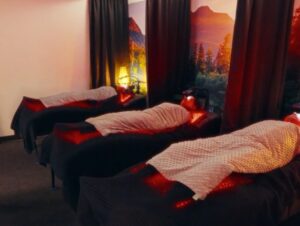
VAT involves the use of a specialized bed or chair that delivers sound frequencies directly to the body through vibration and audio. Sessions are comfortable, non-invasive, and performed while you remain fully clothed.
What does a session feel like?
Most clients describe sessions as relaxing and grounding. You may feel gentle vibrations throughout your body along with soothing sounds. Many people report reduced tension and feeling very relaxed afterward.
How long is a session?
Sessions typically last 60 minutes, depending on your individualized care plan.
What may Vibroacoustic Therapy help support?
VAT is commonly used as a complementary wellness approach to support stress management and may also help with:
- Stress and anxiety reduction
- Improved sleep quality
- Nervous system regulation
- Chronic pain management
- Muscle tension relief
- Emotional well-being
- Recovery support for individuals with TBI or PTS
Is Vibroacoustic Therapy safe?
VAT is gentle and non-invasive, but it may not be appropriate for everyone. Individuals with certain medical conditions (including active blood clots, acute infections, implanted electronic devices, or pregnancy) should consult a qualified healthcare provider before participating. Tier 1 Therapy Centers reviews contraindications prior to sessions.
Do I need to prepare?
No special preparation is required. Wear comfortable clothing and arrive hydrated.
How many sessions are recommended?
Some people notice benefits after one session, while others experience greater results with consistent use. Your care team will help determine an appropriate plan based on your goals.
Is Vibroacoustic Therapy covered by insurance?
At this time, VAT is typically not covered by insurance. Tier 1 Therapy Centers may offer package options or grant-supported care for qualifying veterans, military spouses or first responders.
Can VAT be combined with other therapies?
Yes. Vibroacoustic Therapy is often used alongside Hyperbaric Oxygen Therapy (HBOT), neurofeedback, pulsed light stimulation, photobiomodulation, and other supportive therapies.
FAQs: Pulsed Light Stimulation
What is pulsed light stimulation and how does it work?
Pulsed light stimulation is a non-invasive light and sound wellness technology that uses rhythmic visual patterns and gentle audio to engage the brain through the eyes and ears. This process—often referred to as photic and auditory stimulation—may help encourage balanced brainwave activity through a mechanism called neural entrainment.
By providing consistent external rhythms, pulsed light stimulation offers sensory input that your nervous system responds to by shifting into a calmer, more regulated state. Individual experiences vary.
Pulsed light stimulation works primarily through the visual system, entering the body through the eyes and influencing multiple brain regions involved in awareness, emotion, and nervous system regulation.
What parts of the brain are most involved
Rather than a single structure, pulsed light stimulation influences a network responsible for regulation:
Visual cortex
Processes rhythmic light and helps synchronize brainwave activity.
Thalamus
Acts as a central timing hub. It distributes rhythmic signals across the brain and plays a major role in attention, consciousness, and relaxation.
Brainstem & reticular activating system
Helps regulate alertness, sleep–wake cycles, and autonomic balance. Rhythmic stimulation here may reduce hyperarousal and support parasympathetic activation.
Limbic system (amygdala & hippocampus)
Involved in stress, trauma, memory, and emotional regulation. Predictable rhythmic input can help signal safety and reduce emotional reactivity.
Autonomic nervous system
Pulsed light stimulation helps shift the nervous system away from sympathetic (“fight or flight”) dominance toward parasympathetic (“rest and restore”) balance.
Why this matters for stress, TBI, PTS, and chronic pain
Many people live in a state of chronic nervous system activation. Pulsed light stimulation provides consistent sensory rhythms that may help:
- Reduce stress and anxiety
- Improve focus and clarity
- Support emotional balance
- Encourage relaxation
- Improve sleep quality
- Support nervous system regulation
This is considered a top-down approach (eyes → brain → body), compared to VAT’s bottom-up pathway (body → brain). Results may be subtle or cumulative over time.
How does 40Hz sound and light support brain wellness?
Pulsed light stimulation incorporates 40Hz light and sound patterns, a frequency associated with focused attention and brainwave synchronization. Early research suggests that rhythmic stimulation at 40Hz may help support healthy brain activity and neural communication.
While ongoing studies continue to explore these effects, pulsed light stimulation is offered as a wellness technology and is not intended to treat or reverse neurological conditions.
How often should I use pulsed light stimulation for best results?
General wellness guidelines recommend using pulsed light stimulation approximately three to five times per week, with one session per day when scheduled. This frequency is intended to support consistency and potential neuroplastic changes without overwhelming the nervous system. Your care team can help personalize a schedule based on your goals.
What does a session feel like?
You’ll relax comfortably while wearing specialized goggles. Most clients describe the experience as calming and immersive. Some notice immediate relaxation, while others experience gradual benefits with repeated use.
Important note:
Pulsed light stimulation is a complementary wellness technology. It does not diagnose, treat, or cure medical or neurological conditions. Individual responses vary, and it is intended to support stress management and nervous system regulation alongside professional medical care.