FLYT for First Responders: Supporting Nervous System Recovery After Years of Service

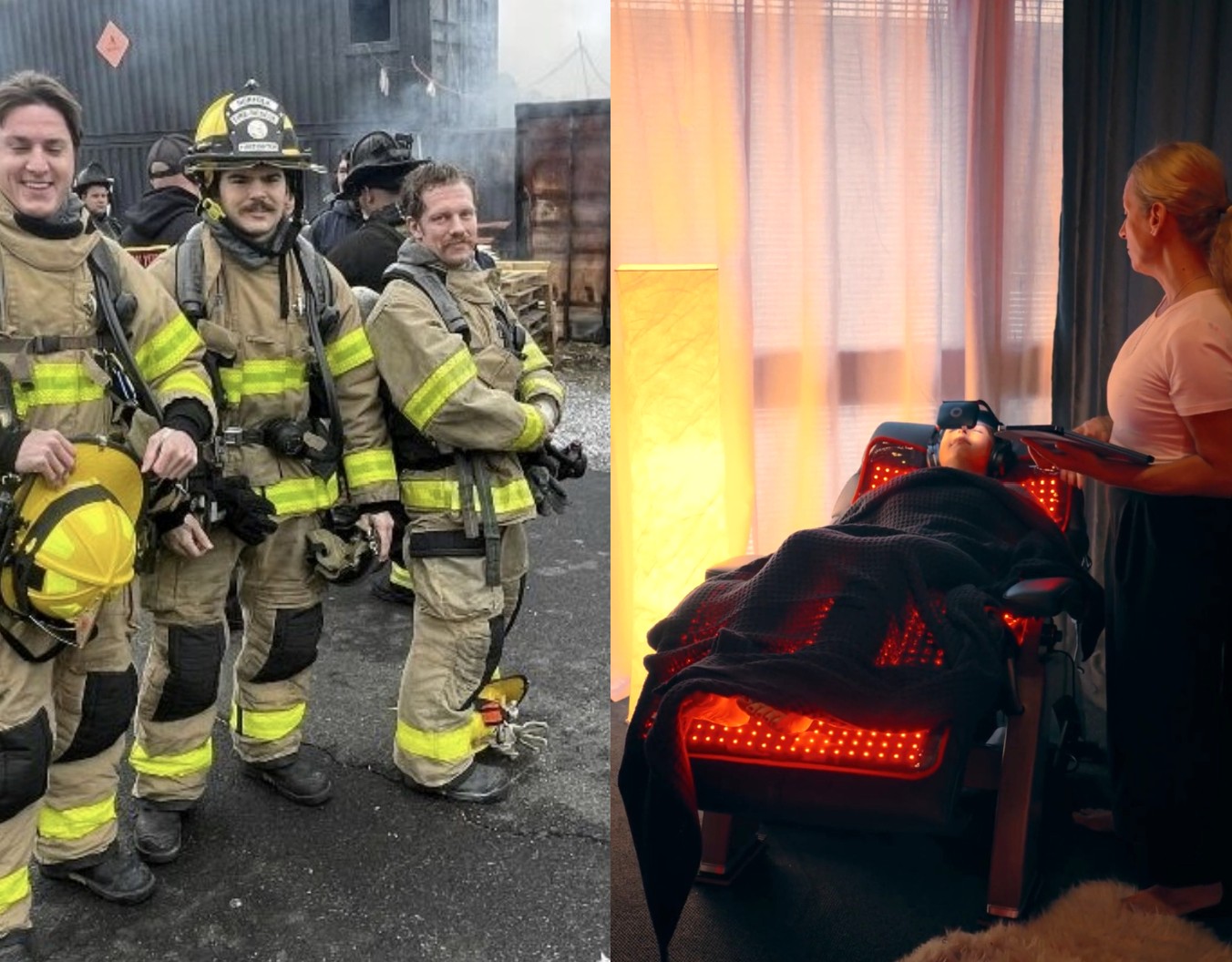
First responders spend their careers running toward situations most people run from. Over time, repeated exposure to critical incidents, shift work, high-alert environments, and operational stress can take a real toll on the nervous system. These effects often appear gradually—poor sleep, brain fog, irritability, anxiety, fatigue, or difficulty “turning off” after shifts.

The FLYT for First Responders Program at Tier 1 Therapy Centers in Norfolk was designed specifically to help support nervous system recovery after years of service.


Why First Responders Need Nervous System Reset Support

Police officers, firefighters, EMTs, dispatchers, corrections personnel, and rescue professionals often operate in a constant state of readiness. Over time, the body can remain stuck in “survival mode.”

Common signs of cumulative operational stress include:

  • difficulty falling or staying asleep
  • reduced focus and mental clarity
  • persistent tension or anxiety
  • emotional fatigue or burnout
  • low energy despite rest
  • slower recovery after stressful calls

These responses are common among high-performing professionals in demanding roles—and they’re exactly what programs like FLYT are designed to address.


What the FLYT Program Is

FLYT is a structured nervous system support program that combines:

  • vibroacoustic sound therapy
  • light stimulation
  • guided breathwork
  • personalized frequency support

Together, these elements help the brain and body shift out of chronic stress patterns and into a more regulated state. Many participants describe it as the first time their system has truly relaxed in years.


How FLYT Supports Recovery and Resilience

FLYT is designed to support regulation—not just relaxation.

Participants often report improvements in:

  • sleep quality
  • stress tolerance
  • mental clarity and focus
  • emotional balance
  • overall resilience to ongoing job demands

Because the program was built with operational professionals in mind, it reflects the realities of cumulative exposure, performance pressure, and irregular schedules.


Designed Specifically for the First Responder Community

First responders are trained to push through stress. But long-term performance requires recovery, too.

The FLYT program provides:

  • structured sessions
  • personalized nervous system support
  • a non-invasive experience
  • a quiet, private setting
  • programming tailored to first responder needs

Many participants don’t realize how long they’ve been operating in a heightened stress state until their nervous system finally gets the opportunity to reset.


Funding Is Currently Available — Apply Here

Funding support may be available for qualified first responders, helping reduce barriers to participation.

You can learn more about the program and submit an application here:
https://tier1tc.com/therapy/flyt-for-first-responders


Supporting Those Who Serve Our Communities

First responders spend their careers protecting others. Supporting their recovery and long-term wellness helps sustain the people our communities depend on every day.

To learn more or start the application process:

Tier 1 Therapy Centers – Norfolk
757-452-3934
https://tier1tc.com/therapy/flyt-for-first-responders


An Absolutely Safe Place to Reset Your Nervous System: Bryce’s FLYT Experience


For the past couple of months, Bryce has been participating in the FLYT Experience — and his words say it best.

“It’s absolutely amazing.”

When Bryce talks about coming in for his sessions, he doesn’t just describe a therapy appointment. He describes a space.

“It’s always very relaxing, very comforting, very grounding,” he shares. “It’s an absolutely safe place.”

That sense of safety is not accidental. It’s foundational.

The FLYT Experience was designed to help calm the nervous system, reduce chronic stress, and support healing from sleep disturbances, anxiety, depression, trauma-related symptoms, and even chronic pain. But what many participants notice first isn’t just symptom relief — it’s how they feel in the space.

Grounded. Supported. Regulated.

A Different Experience Every Time

One of the most fascinating parts of Bryce’s journey has been what happens during pulsed light sessions.

He explains that even when the same frequency of light is used, he sees something different every time.

“That’s because everyone’s brain is working through something different,” he says. “And what you see depends on the intention you bring that day.”

Some days, the intention might be peace.
Other days, it might be better sleep.
Calm. Focus. Emotional clarity.

The brain responds uniquely — session by session — gently processing, recalibrating, and integrating.

For Bryce, it’s been a “wonderful, wonderful, amazing time.”

What Is the FLYT Experience?

The FLYT Experience is a carefully curated, multi-sensory nervous system reset that works by combining several evidence-informed modalities into one cohesive session.

Each experience may include:

  • Vibroacoustic Therapy (VAT)
  • Photobiomodulation (PBM)
  • Pulsed Light Brainwave Entrainment
  • Near Infrared Light Therapy
  • Bio-tuning
  • Breathwork
  • Mindfulness
  • Therapeutic Touch

Rather than targeting just one symptom, FLYT works at the level of the autonomic nervous system — the system that governs stress response, sleep, mood, inflammation, and overall resilience.

Let’s break down how.

Pulsed Light Brainwave Entrainment

Pulsed Light Therapy uses gentle rhythmic light pulses to guide brainwave activity into more regulated patterns.

This can:

  • Induce deep relaxation
  • Improve sleep quality
  • Enhance mood
  • Support focus and cognitive optimization

As Bryce described, the visual experiences during pulsed light sessions are highly individualized. What emerges reflects the brain’s current processing needs and the intention brought into the session.

Vibroacoustic Therapy (VAT)

Vibroacoustic Therapy uses low-frequency sound vibrations — sometimes paired with music or binaural beats — delivered directly through the body.

These frequencies stimulate the vagus nerve, which plays a central role in regulating the autonomic nervous system.

Research has shown VAT can:

  • Reduce stress
  • Improve mood
  • Enhance heart rate variability
  • Support emotional regulation

When the nervous system feels safe, healing can begin.

Near Infrared Light Therapy & Photobiomodulation

Near Infrared (NIR) Light Therapy provides cellular-level support.

These specific wavelengths of light:

  • Boost mitochondrial function (your cells’ energy source)
  • Enhance blood flow to the body and brain
  • Reduce inflammation
  • Support neurological function

When NIR is delivered simultaneously with Vibroacoustic Therapy, the effects are compounded — creating a powerful multi-sensory experience that promotes neuroplasticity.

Neuroplasticity is the brain’s ability to form new, healthier neural connections. This is especially important for individuals recovering from chronic stress, trauma, traumatic brain injury, or long-standing mood challenges.

A Complement to Healing

FLYT is not meant to replace other therapies — it enhances them.

Many participants use FLYT to:

  • Prepare for trauma therapy
  • Improve integration after counseling
  • Strengthen neurofeedback outcomes
  • Support physical rehabilitation
  • Deepen mindfulness practices

By regulating the nervous system first, individuals are often better able to engage in the deeper work of healing.

More Than a Session

For Bryce, FLYT has been more than a protocol. It has been a consistent, grounding experience over the past few months.

A place where the nervous system can soften.
Where the brain can process.
Where intention meets neurobiology.

An absolutely safe place.

And sometimes, that safety is where transformation begins. Call 757-452-3934 to talk with our patient care coordinators.

Stroke Survivor Regains Mobility and Quality of Life with Hyperbaric

Hyperbaric helped Terrance get his life back

After suffering a severe ischemic stroke that left him in a coma for five days and temporarily paralyzed, Terrance faced the overwhelming challenge of rebuilding his life from the ground up. He lost his memory, mobility, confidence, and independence, and spent nearly a year in a wheelchair before teaching himself how to walk again.

“It will bring you back. It’ll make you become the person that you didn’t know you could be.”

Still struggling with neurological symptoms, he came to Tier 1 Therapy Centers to try hyperbaric oxygen therapy (HBOT). Within just a few sessions, he began noticing meaningful changes. His memory started improving, his creativity returned, and he began reconnecting with skills he once relied on as a professional musician and executive chef. Over time, he regained strength, confidence, and a renewed sense of purpose.

Today, he credits HBOT and the supportive environment at Tier 1 Therapy Centers with helping him move forward after stroke and rediscover abilities he feared were lost forever.

Did you know we now offer Neurotherapy?

We are excited to now offer Neurotherapy as part of the suite of services you can find at Hampton Roads Hyperbaric


What is Neurotherapy

Neurotherapy consists of first performing a Quantitative Electroencephalography (QEEG) using a cranial cap with 19 nodes to detect and document the signaling in the brain. The data recorded is then compared to a normative database and analyzed. A comprehensive report is created and from there a personalized neurotherapy protocol is developed. That protocol can consist of multiple versions of talk therapy, neurofeedback, biofeedback and pulsed electromagnetic field therapy.

How it Works?

The human brain is neuroplastic and changeable, which means it will respond to conditioning. Neurotherapy helps patients learn how to self-regulate through a series of neurofeedback and biofeedback sessions. It is very similar to the idea of physical conditioning, where a person’s body grows healthier and stronger with repeated exercise. Neurotherapy teaches a person to produce more optimal signaling patterns using positive reinforcement. We can actually train the brain to function more efficiently by helping normalize and manage neural activity that is out of balance.

What can Neurotherapy help with?

Neurotherapy can help with a wide variety of cognitive,  physiological and psychological impairments, including:

  • Anxiety
  • Depression
  • Trauma
  • ADHD
  • Operator Syndrome
  • Mild Traumatic Brain Injury
  • Autism Disorder Spectrum (ASD)

If you are or anyone you know is experiencing any of the above, we may be able to help. Give us a call at 757-452-3934 or email us at sarah@hrhyperbaric.com for more information.