
Hyperbaric Oxygen Therapy for Long-Haul COVID-19

Long-Haul COVID wreaks havoc on millions of Americans.

SARS-CoV-2 can attack the body in a variety of ways and cause long term damage to lungs, heart, liver, kidneys, nervous system and other organs. The acute phase lasts a few days to a few weeks but reports from doctors around the country state that only a small percentage of patients with COVID 19 are completely free of symptoms more than 12 weeks after the initial infection. The Center for Disease Control (CDC) estimates 30% of the 5.5 million patients hospitalized with COVID-19 since August 2020 are suffering from long COVID syndrome, also known as long-haul COVID or post COVID conditions. That means over 1.6 million people suffer a range of lingering symptoms including lung scar tissue, shortness of breath, heart palpitations, kidney damage, distorted taste and smell, cognitive issues, fatigue, headaches and dizziness. Long-haul COVID is not just limited to those who were severely ill. Even patients who experienced mild to medium COVID symptoms (which, according to Brown University’s School of Public Health, includes as many as 30 million Americans) are suffering from symptoms of long-haul COVID.


What is long-haul COVID?

The World Health Organization defines long-haul COVID as occurring “in individuals with a history of probable or confirmed SARS CoV-2 infection, usually 3 months from the onset of COVID-19 with symptoms that last for at least 2 months and cannot be explained by any other diagnosis. Common symptoms include fatigue, shortness of breath, cognitive dysfunction but also others and generally have an impact on everyday functioning. Symptoms may be new onset following initial recovery from an acute COVID-19 episode or persist from the initial illness, which fluctuate or relapse over time.”


What are the symptoms of Long-Haul COVID?

Cognitive impairments may linger after acute coronavirus infection. According to Johns Hopkins Medicine, some people are left with lingering physical weakness, depression, anxiety and report changes in the way they think, speak, remember and concentrate. These lingering symptoms can be complicated by long periods of isolation, job loss, financial difficulties or grief from the death of loved ones. 


Long-Haul COVID Recovery with HBOT

Doctors and clinics around the globe are starting to look at hyperbaric oxygen therapy as a way to combat post COVID 19 syndrome due to its proven anti-inflammatory effects. A pilot study is currently being conducted to study pulmonary fibrosis and other sequelae in patients who have had COVID-19 with lingering symptoms past 12 weeks of recovery from the acute phase.


Patients with lingering symptoms of COVID who have failed traditional medical therapies such as inhalers, steroids and supplements are finding symptom improvement with HBOT.  They report being able to breathe easier, improved physical strength, more energy and better mental focus.  Tessa had been suffering from symptoms of long-haul covid for more than a year. She had been prescribed inhalers and steroids and tried different supplements for her shortness of breath, chronic fatigue and insomnia but wasn’t getting better. Her doctor had little left to try and finally suggested she try hyperbaric oxygen therapy. Tessa said after 15 treatments, “I’ve had the best days I’ve had in months,” remarking shortness of breath is better as well as improved energy levels and sleep quality.


Tier I Therapy Centers have been successful in treating patients experiencing lingering symptoms of long-haul COVID such as cognitive impairment, chronic fatigue, chronic inflammation, and/or trouble breathing, using hyperbaric oxygen therapy. Call us today for a consultation to see if HBOT is right for you!


Testimonials

Tessa’s Story: https://www.youtube.com/watch?v=kjmmD-JaY_o

Mae’s Story: https://www.youtube.com/watch?v=iRytg5tJ4Iw


*Disclaimer: Information provided here is not to be considered medical advice. Hyperbaric oxygen therapy for non-approved, off-label indications is considered to be investigational.

 

Former baseball player and Hampton Roads resident using HBOT to accelerate recovery

News Channel 3 Features Brock Peterson’s Road to Recovery That Includes Hyperbaric Oxygen Therapy

Click the link below to watch the news story.

News Channel 3, WTKR features Brock Peterson’s Story

Sometimes life throws us a curve ball. We’ve all experienced it! Brock Peterson has recently had to deal with quite a curve ball after a freak accident in July rendered him paralyzed from the chest down.

After leaving the hospital (including 17 days in ICU) Brock immediately attended the Shepherd Center in Atlanta to help him on his road to recovery. Upon return to Hampton Roads, he continues to work hard to get “back to normal”.

Brock is currently attending therapy at ODU and now receiving hyperbaric oxygen therapy (HBOT) here at Hampton Roads Hyperbaric in Norfolk. He is now starting to see an increase in both strength and mobility. He has just started to move his finger and can now raise his arms over his head. HBOT plays a key role in accelerating recovery by enabling 100% healing oxygen to damaged cells, increasing stem cell mobility and decreasing inflammation.

Brock is truly an inspiration. His positive attitude cannot be overlooked, coupled with his determination and dedication, doctors are saying now that a full recovery is possible.

Stay tuned as we post more as Brock continues on his road to recovery.

To support Brock’s recovery, go to his Gofundme page: Support Brock’s Recovery. Click here.

Did you know we now offer Neurotherapy?

We are excited to now offer Neurotherapy as part of the suite of services you can find at Hampton Roads Hyperbaric


What is Neurotherapy

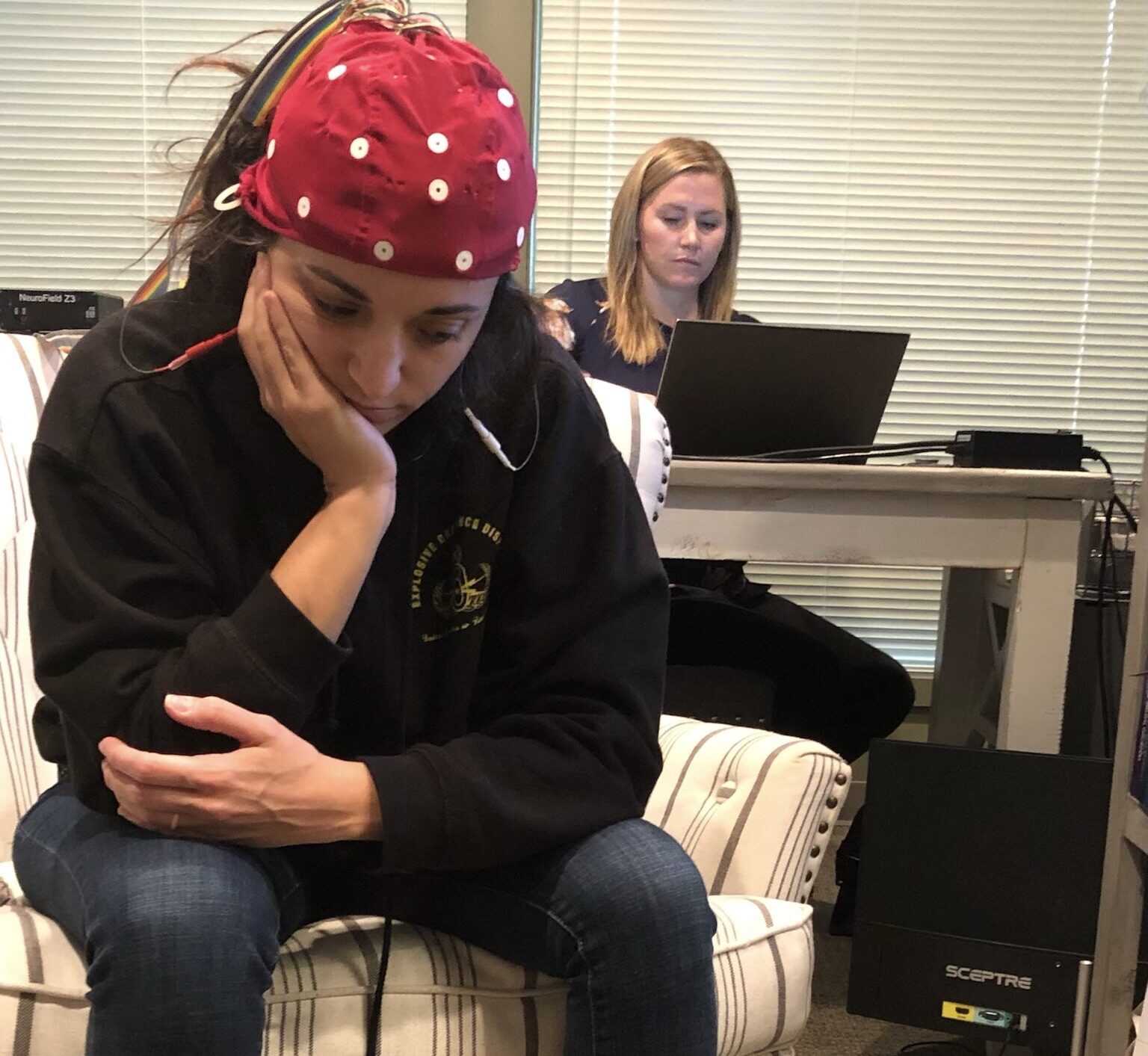
Neurotherapy consists of first performing a Quantitative Electroencephalography (QEEG) using a cranial cap with 19 nodes to detect and document the signaling in the brain. The data recorded is then compared to a normative database and analyzed. A comprehensive report is created and from there a personalized neurotherapy protocol is developed. That protocol can consist of multiple versions of talk therapy, neurofeedback, biofeedback and pulsed electromagnetic field therapy.

How it Works?

The human brain is neuroplastic and changeable, which means it will respond to conditioning. Neurotherapy helps patients learn how to self-regulate through a series of neurofeedback and biofeedback sessions. It is very similar to the idea of physical conditioning, where a person’s body grows healthier and stronger with repeated exercise. Neurotherapy teaches a person to produce more optimal signaling patterns using positive reinforcement. We can actually train the brain to function more efficiently by helping normalize and manage neural activity that is out of balance.

What can Neurotherapy help with?

Neurotherapy can help with a wide variety of cognitive,  physiological and psychological impairments, including:

  • Anxiety
  • Depression
  • Trauma
  • ADHD
  • Operator Syndrome
  • Mild Traumatic Brain Injury
  • Autism Disorder Spectrum (ASD)

If you are or anyone you know is experiencing any of the above, we may be able to help. Give us a call at 757-452-3934 or email us at sarah@hrhyperbaric.com for more information.

Joining Forces to Treat Operator Syndrome

After treating hundreds of warriors and their families suffering from mild traumatic brain injury and post traumatic stress, Hampton Roads Hyperbaric has joined forces with Dr. Gregory J. O’Shanick to provide an integrative, comprehensive program unlike any other in the area for our Special Operations Forces (SOF) suffering from ‘Operator Syndrome”. Dr. O’Shanick is a foremost brain injury expert and founder of The Center for Neurorehabilitation Services (CNS) in Richmond, VA.

Our SOF here in Virginia face great challenges to recovery due to prolonged stress overload, rigorous training and unprecedented combat exposure. This creates a unique constellation of health conditions and symptoms which in recent years has become known as Operator Syndrome.

Health issues from Operator Syndrome include functional impairments, endocrine dysfunction, sleep disturbance, obstructive sleep apnea, chronic pain, chronic headaches, orthopedic problems, headaches, substance abuse, depression and suicide, marital and family dysfunction, problems with sexual health and intimacy, hypervigilance, memory, vision and cognitive impairment.

Recognizing the full-spectrum of Operator Syndrome is critical to proper assessment, care and recovery. Our evidence-based, multi-modal program address the myriad health issues SOF face in order to improve quality of life and accelerate recovery. The 8-week program provides professional, medical oversight through-out the course of treatment, combined with best-in-class assessments, hyperbaric oxygen therapy (HBOT), neurotherapy, talk therapy, near infrared light therapy and clinical tools to measure results.

  • Patients undergo extensive intake with multiple providers. Psychophysiological profiles consisting of Quantitative Electroencepliographs (QEEG) and physiological stress assessments, computer-based cognitive assessments and vision assessments are performed.
  • O’Shanick and team analyze all data to develop a personalized treatment protocol. Data is shared with other providers that may also be treating the patient, when possible.
  • HBOT and near infrared light therapy are utilized to increase blood flow to the damaged tissue, reduce inflammation, create additional blood vessels, mobilize stem cells and stimulate healing.
  • Neurotherapy and biofeedback address neurological and psychological symptoms and enable patients to learn how to change physiological activity to improve health and performance.
  • Precise instruments measure brainwaves, heart function, breathing, muscle activity, and skin temperature. These instruments rapidly and accurately “feed back” information to the user. The presentation of this information — often in conjunction with changes in thinking, emotions, and behavior — supports desired physiological changes. Over time, these changes can endure without the continued use of an instrument.
  • The program also integrates talk therapy, vision therapy, occupational therapy, speech therapy, and proprietary protocols developed by CNS to optimize rehabilitation.
  • Post treatment QEEG and medical assessments demonstrate evidence of results.
  • Upon completion, patients have access to tools and training for follow-up and ongoing self-care.

Whether you are a provider, potential patient or donor, please call us immediately at 757-452-3934 to enroll or learn more.

Neurofeedback for Depression and Rumination

Neurotherapy is being used across the world to treat many different physiological and psychological issues. At Hampton Roads Hyperbaric, we use neurotherapy, including neurofeedback and biofeedback, to treat conditions such as depression, anxiety, ADHD, PTS, ASD and cognitive decline.

A recently published article sites the benefit of neurofeedback to reduce depressive symptoms.

Click on the link below to view the article.

Neurofeedback for Depression and Rumination

Hyperbaric Oxygen Therapy for Chronic Fatigue and Thyroid Condition

Nikki experienced chronic fatigue for quite sometime, then she was diagnosed with Hoshimoto’s Thyroid Disease. She tried changes in diet, exercise but nothing seemed to provide any lasting relief.

After being frustrated and disappointed, Nikki, turned to online research to find alternative treatment options. She started reading about HBOT and how it is effective in helping with many autoimmune conditions. Her research indicated that breathing 100% oxygen under pressure allows your body to carry and use much more oxygen in a very effective manner. When your blood carries this extra oxygen throughout your body, it helps fight bacteria and stimulate the release of growth factors and stem cells, which promote healing.

After completing 20 hyperbaric sessions, Nikki’s fatigue decreased tremendously. The pain and heaviness in her arms and body subsided and she felt like she was getting “back to her normal self”.


Navy veteran makes a life-saving choice with support from local non-profit

Dale had a positive attitude when he arrived at Hampton Roads Hyperbaric despite the long list of health issues he needed to address. He had been living with these ailments for years, not unlike many other veterans today.

Dale dealt with the fall-out from mild traumatic brain injury and other service-related issues. He had constant anxiety and depression which played a huge factor in his every day life.  Dale also experienced pain, cognitive decline,  insomnia and other things that robbed him of living the life he wanted to live the way he wanted to live it.

Dale’s hyperbaric oxygen therapy was funded by the amazing folks at Coastal Authority Care Foundation, an incredible organization dedicated to helping heal the invisible wounds of war.

Dale’s experience and recovery is a testament to his own dedication and tenacity combined with support from people who care deeply. They say it take a village to raise a child… well, it takes a country to heal a veteran.

Listen to Dale tell his story!

Patient finally finds relief after burn injury

Chris suffered from burns to his feet that created terrible nerve pain. He as unable to stand on his feet, experienced constant pain and was unable to go back to work. Chris tried many therapies but nothing seemed to work. After refusing to believe that he would have to live in constant pain, he found his way to Hampton Roads Hyperbaric Therapy.

After Chris was cleared by Dr. Steckler, he participated in 40 hyperbaric oxygen therapy sessions. After about the 22nd session Chris’s pain started to greatly decrease. By the end of his treatment, his pain was almost gone and he was cleared to go back to work.

See Chris’s story below!

A healthy, young woman was debilitated from COVID until undergoing hyperbaric oxygen therapy

May is a personal trainer focused on living a healthy life and helping others do the same. Several weeks ago she got COVID and it stopped her in her tracks. She found herself in a scary position. She could not breath normally and got winded with any movement. Her the saturation of oxygen in her blood was extremely low causing her great difficulty breathing and moving.  She was nervous that her body would shut down from lack of oxygen. She underwent HBOT and quickly got her oxygen levels back to acceptable ranges and began to recover.

Check out May’s story now.


Parkinson’s and Hyperbaric Oxygen Therapy

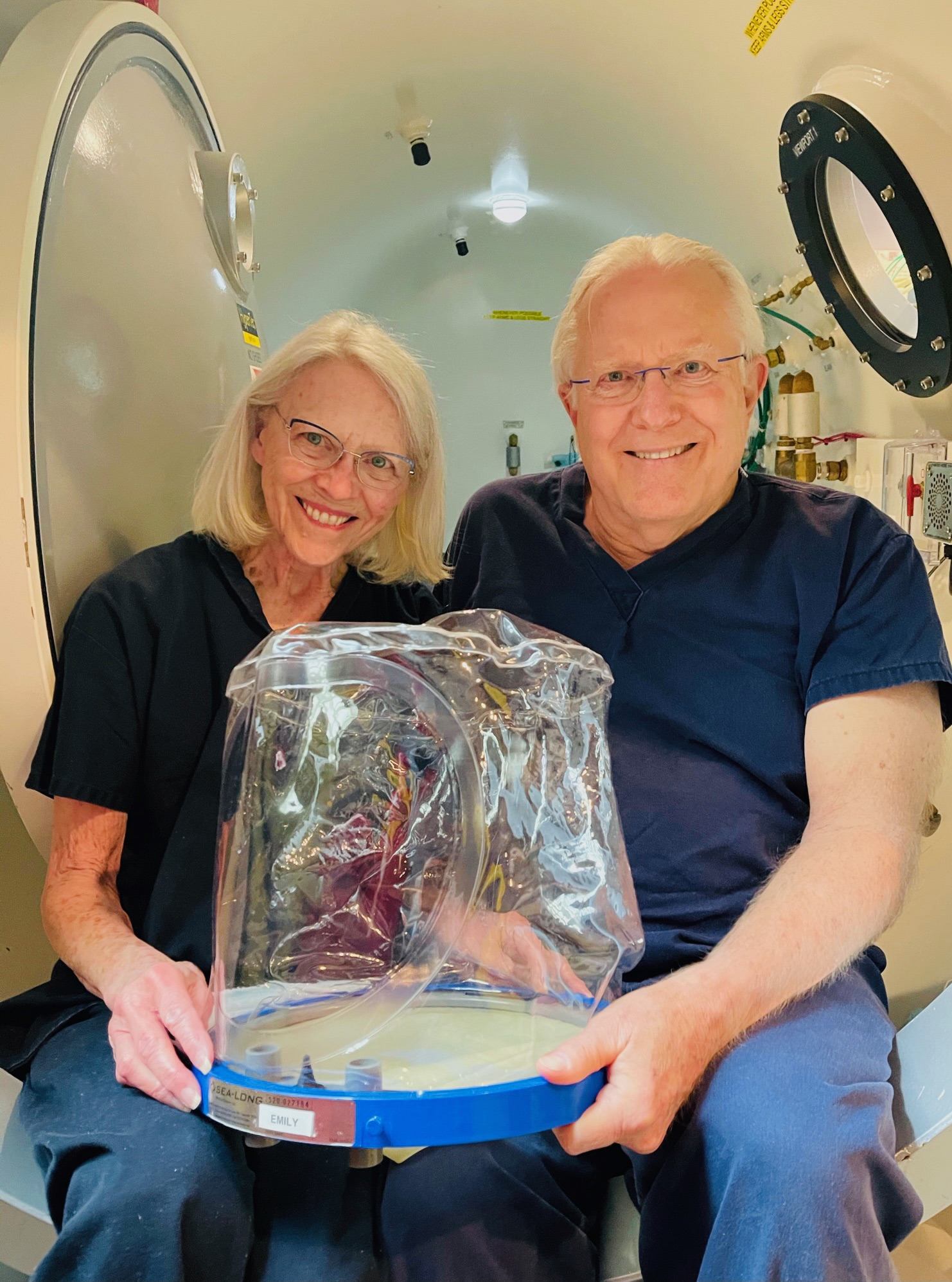
After doing a lot of research and consulting with multiple experts, Emily and Ray sought out hyperbaric oxygen therapy to help with Emily’s Parkinson’s symptoms.  Being the amazing caregiver that Ray was (and is), he knew he’d be undergoing treatment right along side of Emily to provide her with love and support. What he didn’t realize was how the therapy would also change his life!

Watch their story now!